
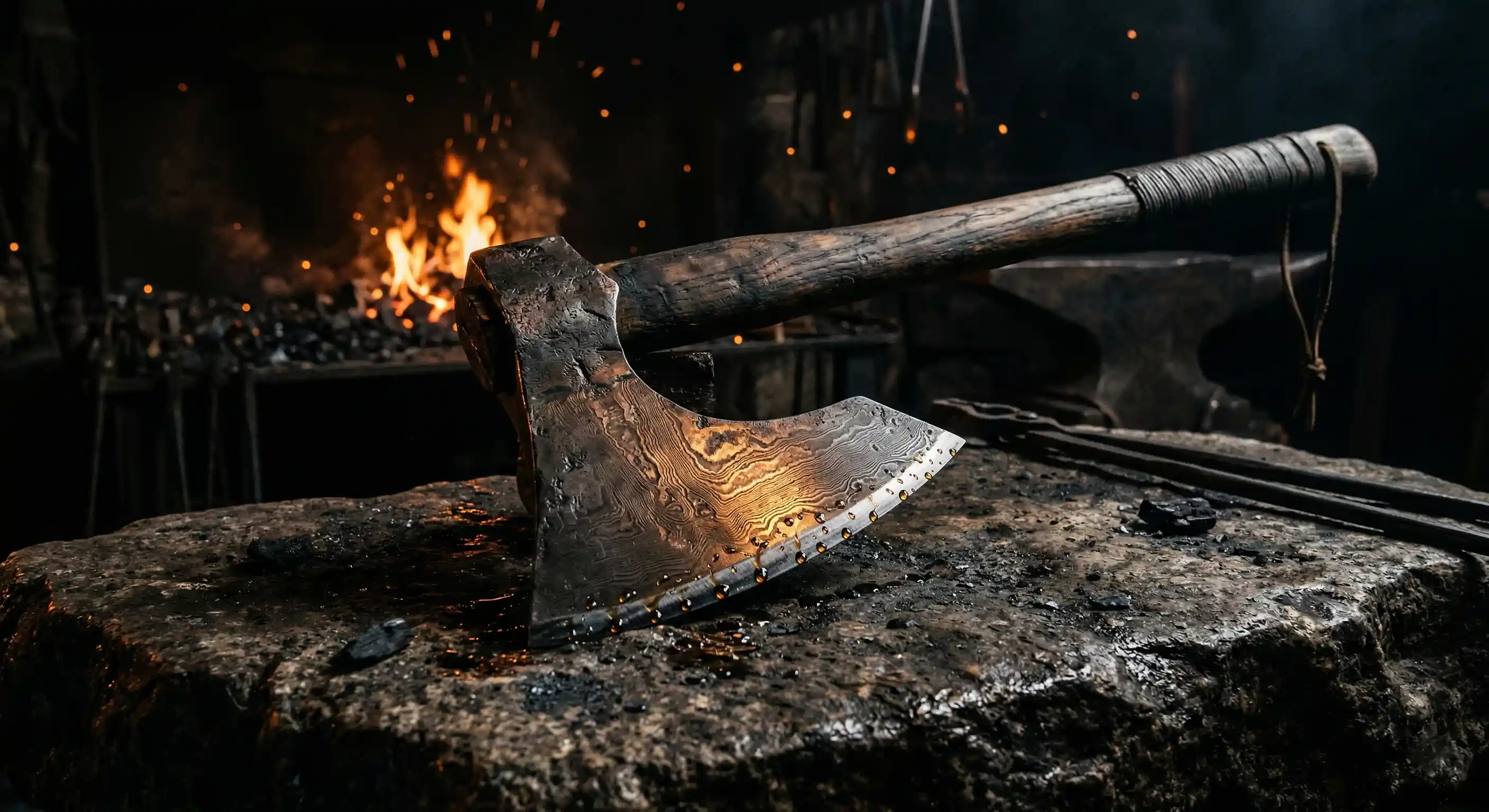
Among all the weapons that defined the Viking Age, one stands apart for its sheer size, devastating power, and historical impact. The Dane axe, known in Old Norse as the “breiðøx” or broad axe, was the most feared melee weapon of the early medieval period. Wielded by the most elite Norse warriors, it changed the face of medieval warfare and left a mark on European history that can still be felt today.
What is a Dane Axe?
The Dane axe is a large, two-handed battle axe that emerged as the dominant weapon of Viking warriors between the 10th and 11th centuries. Unlike the smaller single-handed axes used by most Norse fighters, the Dane axe featured an exceptionally long shaft, typically between 90 and 150 centimeters, topped by a broad, thin blade with a dramatically curved cutting edge that could measure up to 45 centimeters across.
This combination of length and blade width gave the Dane axe a reach and cutting power that no sword or spear could match. In the hands of a skilled warrior, it could cleave through shields, sever limbs, and cut down multiple opponents in a single sweeping blow.
The Origins of the Dane Axe
The Dane axe developed gradually from earlier Norse bearded axes during the late Viking Age. Its rise to prominence coincided with the period of greatest Viking expansion across Europe, from the raids on England and France to the Norman conquests and the establishment of Viking kingdoms across the British Isles.
The weapon takes its modern name from the Danes, the Norse people who played a central role in the Viking raids on England during the 9th and 10th centuries. English chroniclers of the period referred to these fearsome two-handed axes as “Danish axes,” a name that stuck in historical literature. However, the weapon was used across all Norse cultures, from Norway and Sweden to the Viking settlers of Ireland and Normandy.
Design and Construction
The Blade
The defining feature of the Dane axe is its broad, thin blade. Unlike the thick, wedge-shaped blades of woodcutting axes, the Dane axe blade was forged to be as thin and sharp as possible, optimized purely for cutting through flesh, bone, and shield wood. The blade was typically forged from high-carbon steel at the cutting edge, welded onto a softer iron body to combine hardness with flexibility and resistance to shattering.
The cutting edge curved dramatically, with both the upper and lower corners extended outward to maximize the length of the cutting arc. This shape allowed warriors to hook shields, pull opponents off balance, and deliver sweeping cuts that were almost impossible to block effectively.
The Shaft
The shaft of a Dane axe was typically made from ash wood, chosen for its combination of strength, flexibility, and lightness. Long enough to require two hands for effective use, the shaft gave the weapon exceptional reach, allowing a skilled warrior to strike from outside the range of most swords and spears.
Some Dane axes were fitted with metal reinforcements along the upper portion of the shaft, protecting it from being cut by an opponent’s blade during combat. This detail, visible on several surviving examples, shows the sophistication of Viking weapon design.
The Dane Axe in Battle
Breaking the Shield Wall
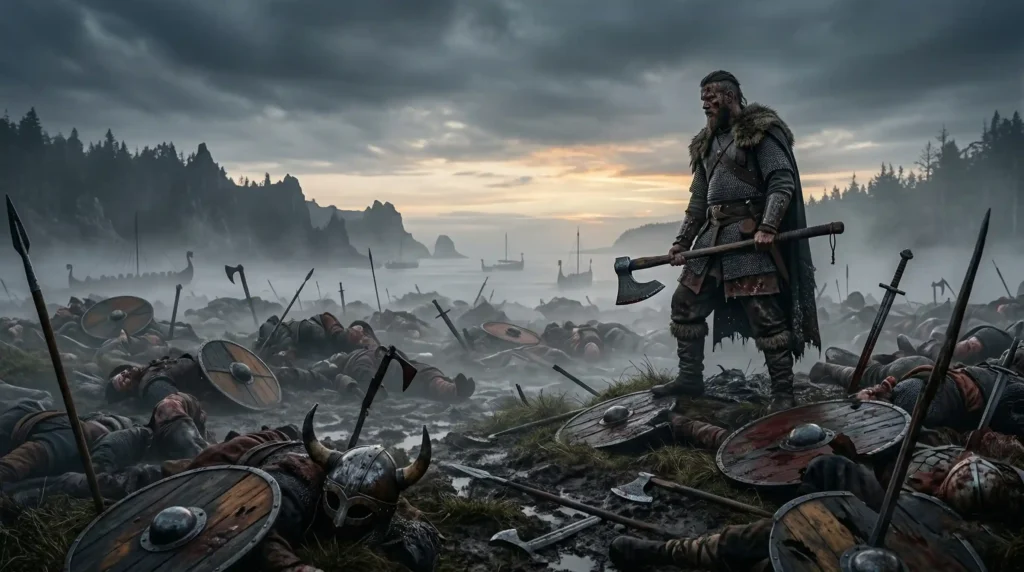
The Dane axe was the ultimate shield wall breaker. Its long reach allowed warriors to strike over the top of an opposing shield wall, while its hooked blade could reach around or under shields to pull them away from defenders. A single well-placed blow from a Dane axe could shatter a shield entirely, exposing the warrior behind it to a lethal follow-up strike.
In the brutal close-quarters combat of medieval battles, where shield walls clashed at arm’s length, the Dane axe gave its wielder a decisive advantage. Warriors who carried it were typically placed at the front of the formation, tasked with breaking through enemy defenses and creating gaps for their companions to exploit.
Famous Dane Axe Warriors
The Dane axe is closely associated with some of the most feared warriors in Viking history. The Varangian Guard, the elite Norse mercenary unit that served the Byzantine Emperors in Constantinople, was famous for its use of the Dane axe. Byzantine sources describe these warriors as wielding enormous axes capable of cutting through fully armored opponents in a single blow.
The Battle of Stamford Bridge in 1066, one of the last great Viking battles, includes one of the most famous individual axe stories in history. A lone Norse warrior, armed with a Dane axe, reportedly held the entire English army at bay on a narrow bridge for an extended period, cutting down attacker after attacker until he was finally killed by a spear thrust from below.
The Norman Conquest
The Dane axe appears prominently in the Bayeux Tapestry, the famous embroidered account of the Norman Conquest of England in 1066. Both Viking and English warriors are depicted wielding the weapon, confirming its widespread use across northern European cultures by the late Viking Age. The weapon remained in use well into the 12th century, long after the Viking Age had officially ended.
The Dane Axe vs Other Viking Weapons
The Dane axe occupied a unique place in the Viking arsenal. Unlike the sword, which was expensive and reserved for wealthy warriors, or the spear, which was the most common weapon of ordinary foot soldiers, the Dane axe sat in a middle ground of prestige and practicality.
It required significant skill and strength to wield effectively in two hands while remaining mobile on the battlefield. Warriors who mastered the Dane axe were elite fighters, feared by enemies and respected by their own side. Its combination of reach, power, and versatility made it arguably the most effective single weapon of the Viking Age.
Own a Piece of Dane Axe History
The legacy of the Dane axe lives on in the tradition of Norse blacksmithing that continues to this day. At Viking-Axe.com, our collection of hand-forged Viking axes honors that tradition, with each piece individually crafted using the same high-carbon steel and traditional forging techniques that Norse blacksmiths used over a thousand years ago.
Whether you are a history enthusiast, a collector, or simply someone who appreciates genuine Norse craftsmanship, a hand-forged Viking axe is one of the most powerful connections you can have to the legendary world of the Viking warrior.